Life-impact story · Spend & Grow interpretation
How a Blender Changes What You Actually Make
A blender changes life only when the things you imagine making become things you actually make.

Begin with what already gets made
The useful starting point is not a motor label or a recipe reel. It is the breakfast, sauce, soup, dip, drink, or other preparation that already appears in the week — and the method that currently makes it happen.
Sometimes the answer is an immersion blender in the cooking vessel, a food processor for thicker preparation, a whisk or masher, a prepared smoothie, an older blender, or no blended dish at all. A countertop machine must compete with that complete reality.
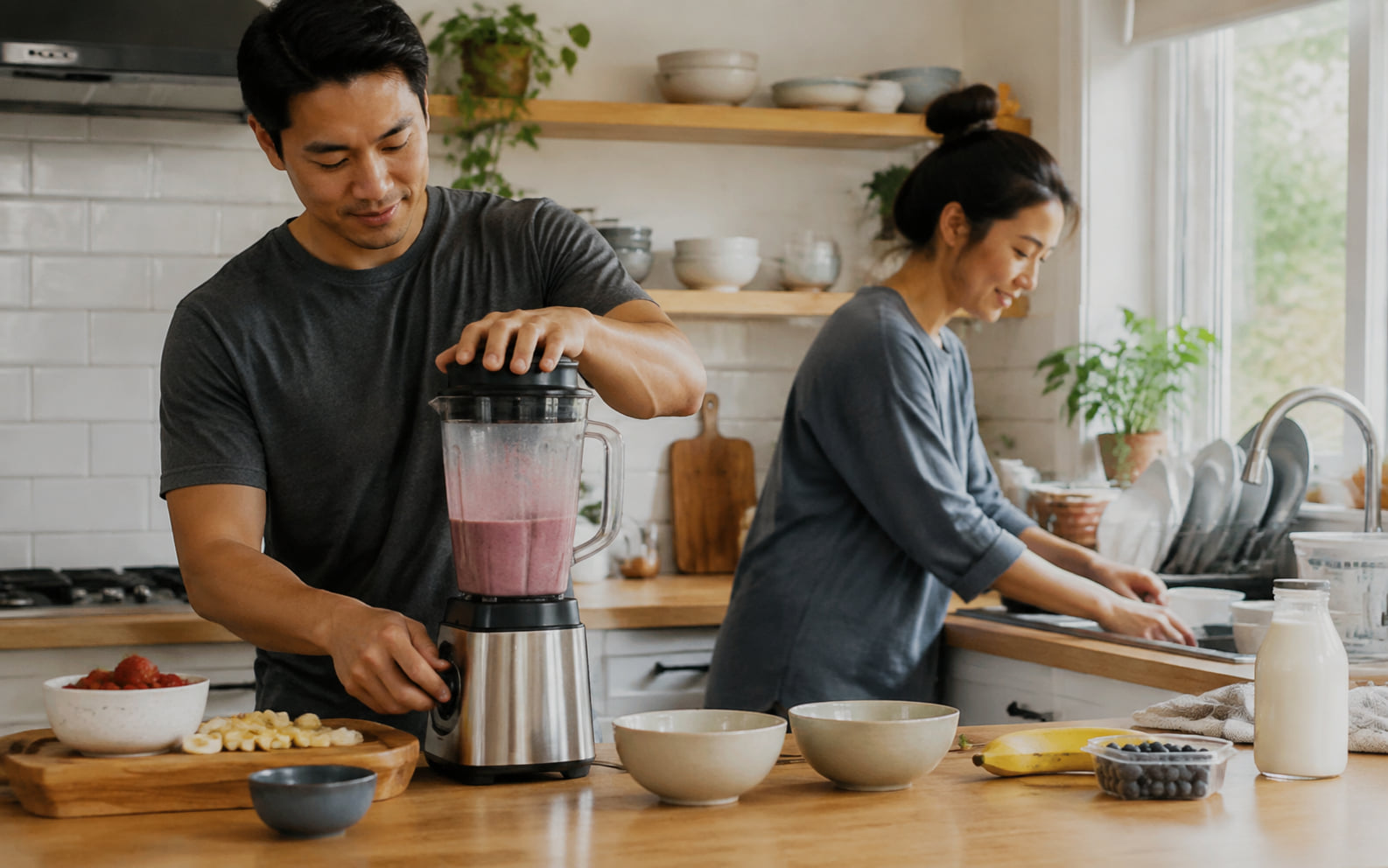
Repetition gives the machine a role
A personal cup can keep one serving close to the drinking vessel. A full-size pitcher can hold several servings or a broader recipe. A higher-capability system matters only when a difficult supported mixture is already real. Each choice removes some activities and introduces its own preparation, loading, attention, serving, noise, and learning.
Serving-size mismatch is easy to miss. One person may resent a pitcher; a household may resent repeated cups. The format changes the daily loop before any performance comparison begins.
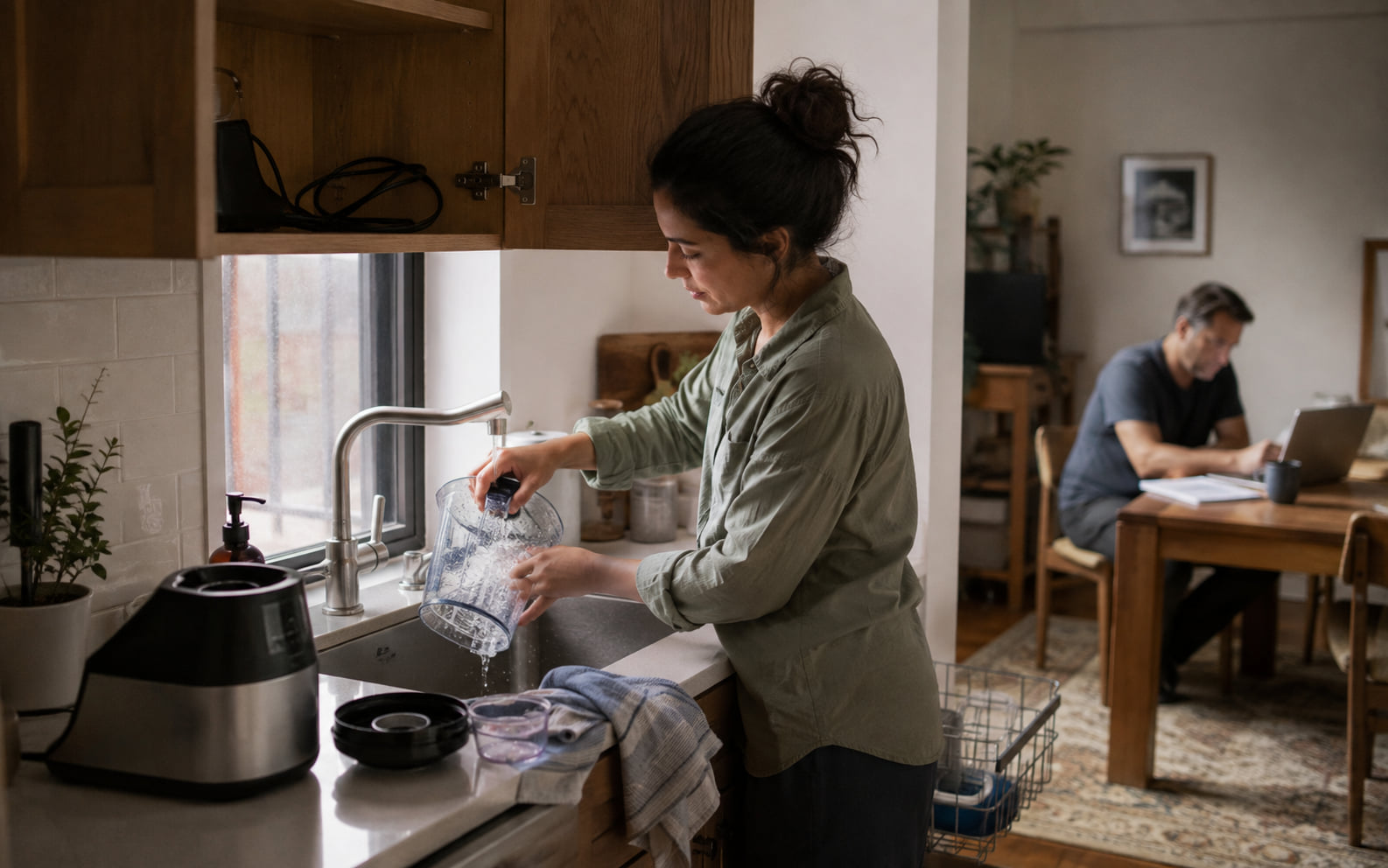
The blend ends before ownership does
After serving, the jar or cup, lid, seal, blades, tamper or accessories, sticky residue, drying space, base, cord, cabinet clearance, and storage still remain. Early-morning noise can shape whether an otherwise workable routine happens at all.
A blender earns its place through repetition, not capability on paper. If the real foods, serving pattern, wash, noise window, and available space do not support that repetition, keeping what you already use can be the better life.
No universal time saving or product-performance result is claimed.
Explore the Blenders decision guide