Spend & Grow Explore categories
Menu

Ask the blender to do more

Pay for capability only when the difficult jobs are real.

A higher-capability full-size system belongs in the decision only when a demanding, manufacturer-supported job already recurs.

This path requires a named workload and current exact-model evidence; power labels alone do not establish a better texture, safer use, or better life.

Editorial illustrations

What this routine looks like in daily life

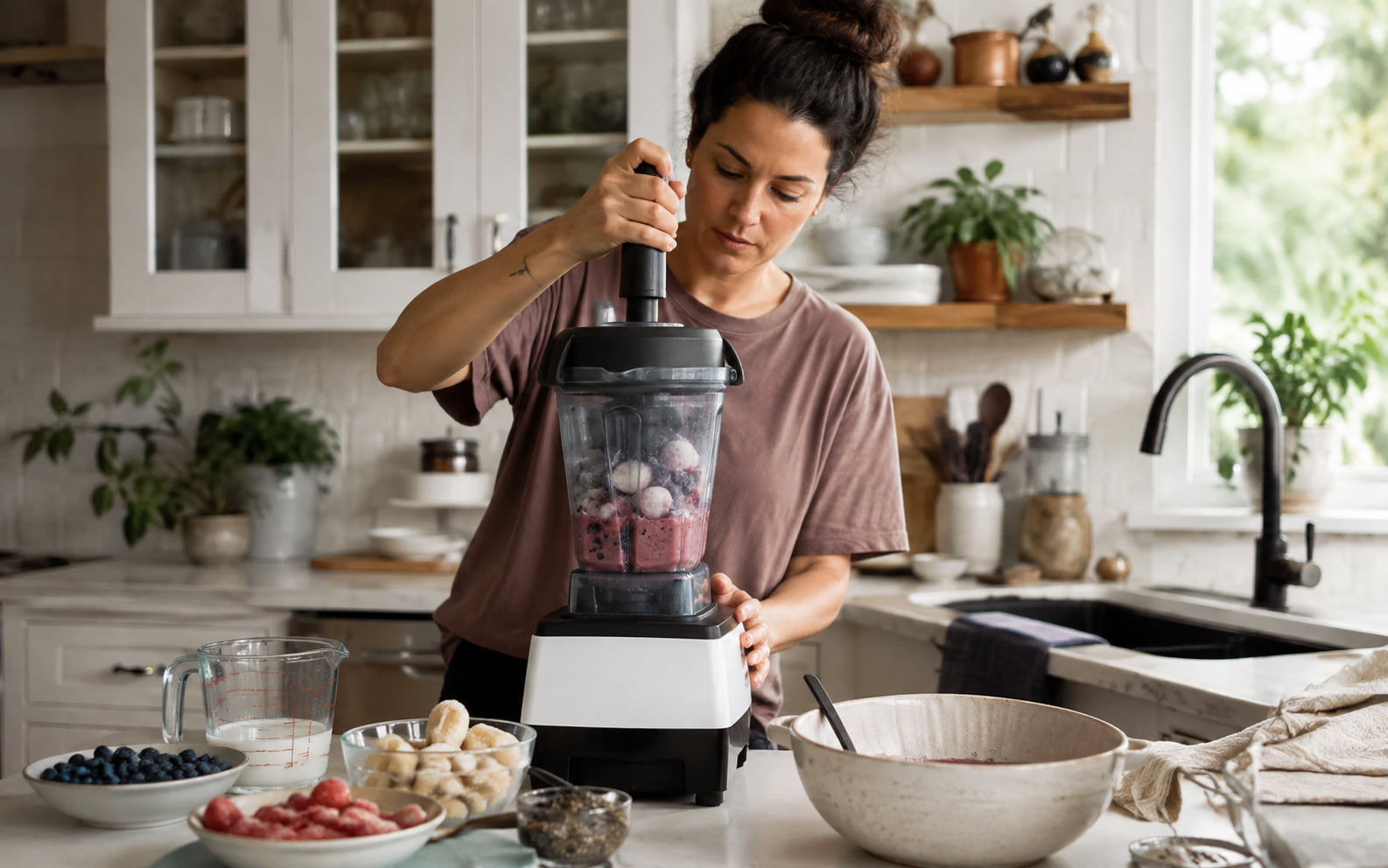
Editorial scene showing a generic full-size blender handling a dense mixture with preparation and safe active intervention visible.
Lifestyle-HeroEditorial illustration ยท not product identity or evidence

What may become possible

A real difficult mixture may move out of repeated workaround cycles when the exact machine and container are verified for it.

  • A verified difficult job may move into one purpose-built workflow instead of repeated workaround attempts.
  • More adjustment or a supported accessory can matter when it changes a real repeated task.

What capability asks

Preparation, liquid ratios, load order, tamping or scraping, supervision, noise, larger parts, learning, washing, storage, and purchase stakes can all expand.

  • Higher purchase stakes, a substantial base, noise, controls, accessories, and storage can exceed everyday use.
  • Dense mixtures can still require preparation, tamping, scraping, liquid adjustment, serving effort, and cleanup.
Time Exchange

What leaves, and what enters?

Demanding blends are not treated as unattended by default; exact supervision, tamper use, and cycle behavior require current manufacturer instructions.

Activities displaced

  • Repeat workaround cycles when a current tool cannot handle a real difficult mixture
  • Buy or avoid a blended result because the current preparation path does not fit

Activities introduced

  • Prepare frozen, fibrous, dense, or otherwise demanding ingredients within documented limits
  • Choose the verified container, load order, liquid ratio, batch size, and controls
  • Blend, tamp where supported, scrape, stop, redistribute, and adjust the mixture
  • Scrape or transfer the result and portion it for serving or storage
  • Clean the container, lid, food-contact assembly, tamper or accessories, and base
  • Store or keep accessible a larger base, container, cord, tamper, and accessory system
  • Choose a blending window that fits sleeping people, conversation, and shared space

Fit and friction

Test this life against the routine.

Demanding frozen or thick mixtures, larger repeated batches, or another manufacturer-supported job is already real rather than aspirational.

  • The demanding job occurs often enough to describe and observe.
  • The buyer is willing to learn ingredient order, liquid ratios, batch limits, and any tamper or manual intervention.
  • Official documentation confirms the exact machine and container support the intended food and temperature.

Do frozen ingredients or thick mixtures genuinely recur?

Demanding mixtures can change container, preparation, tamper, liquid-ratio, and exact-use-boundary research.

Is the imagined use already real or mostly aspirational?

A purchase cannot establish a food habit by itself, while an existing routine gives the appliance a concrete role.

Who will use the blender, and which controls or accessories will they actually repeat?

Several users can value simple repeatable controls, while unused cups, jars, or attachments add storage and cleaning burden.

Which cleanup loop will you willingly repeat?

Cups, lids, seals, pitchers, fixed or removable food-contact parts, sticky residue, and drying can decide whether the appliance is reused.

Will the blender live within reach or be retrieved from storage?

Base weight, container height, cabinet clearance, cord, and accessory storage can determine whether a recurring job stays repeatable.

Exact products

Product-specific coverage remains under review.

The product-neutral guide keeps this life intact without linking to a blocked exact-product profile.