A possible ownership outcome
A weeknight workhorse
A specific, recurring small-batch job earns permanent space.
A category for everyday dinner
An air fryer can quietly earn its place at dinner — or become another appliance to clean and store.
Product-neutral decision guideFOUR COUNTERTOP-HEAT LIVES
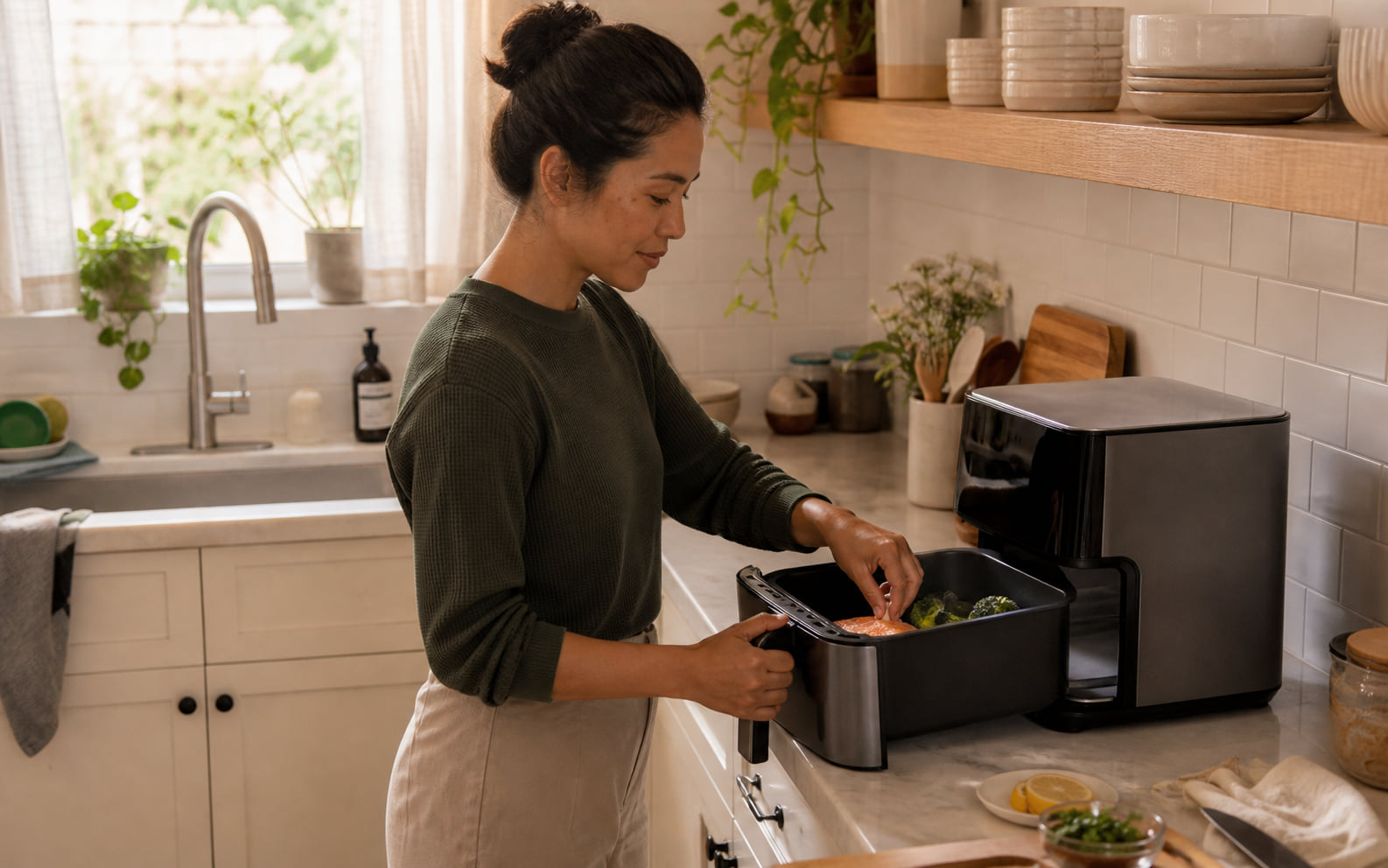
 Product-neutral editorial sceneKeep the ovenLet the current kitchen keep doing the job.Explore this life
 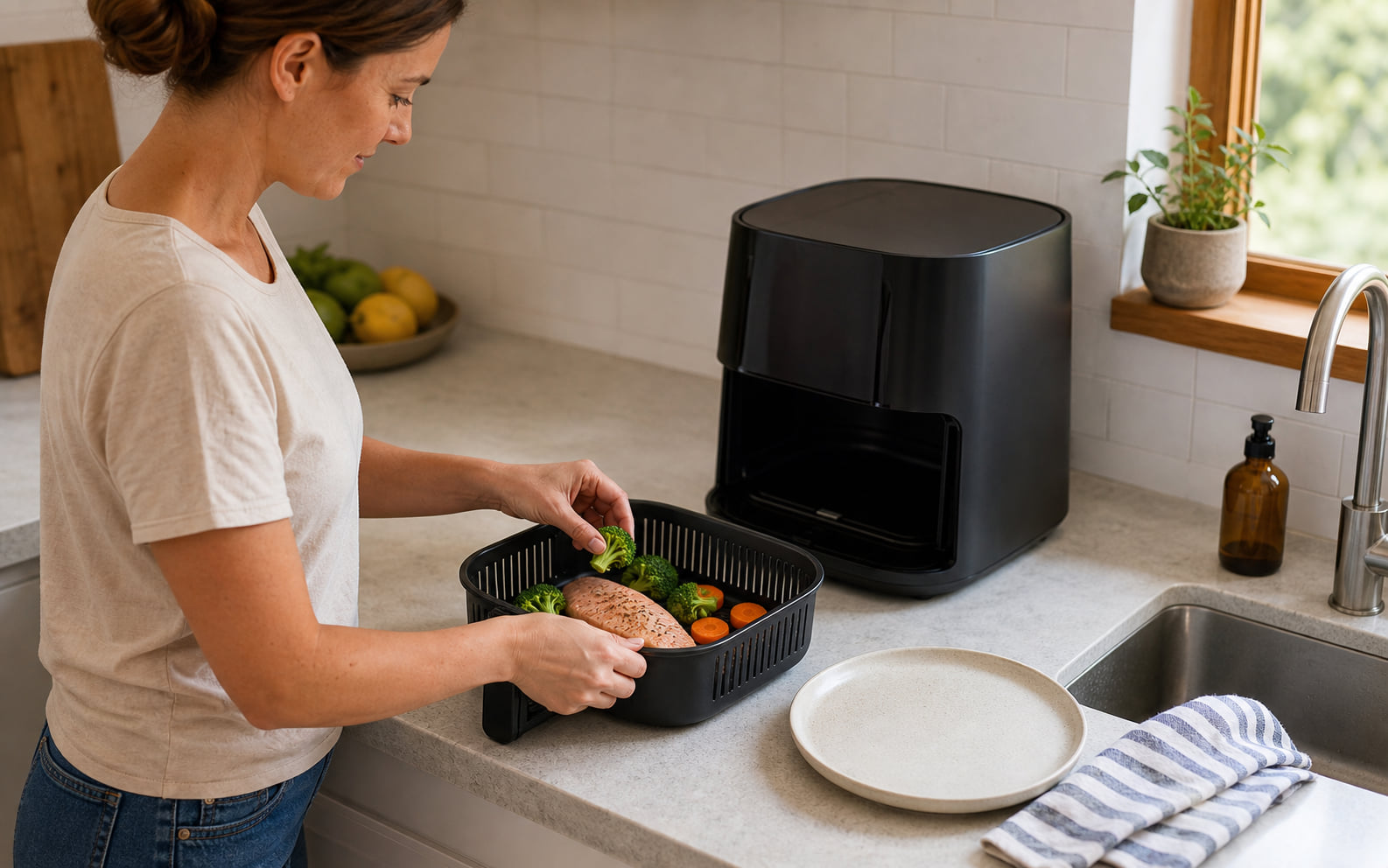 Product-neutral editorial sceneMake the interaction smallGive one modest batch a bounded hot zone.Explore this life
 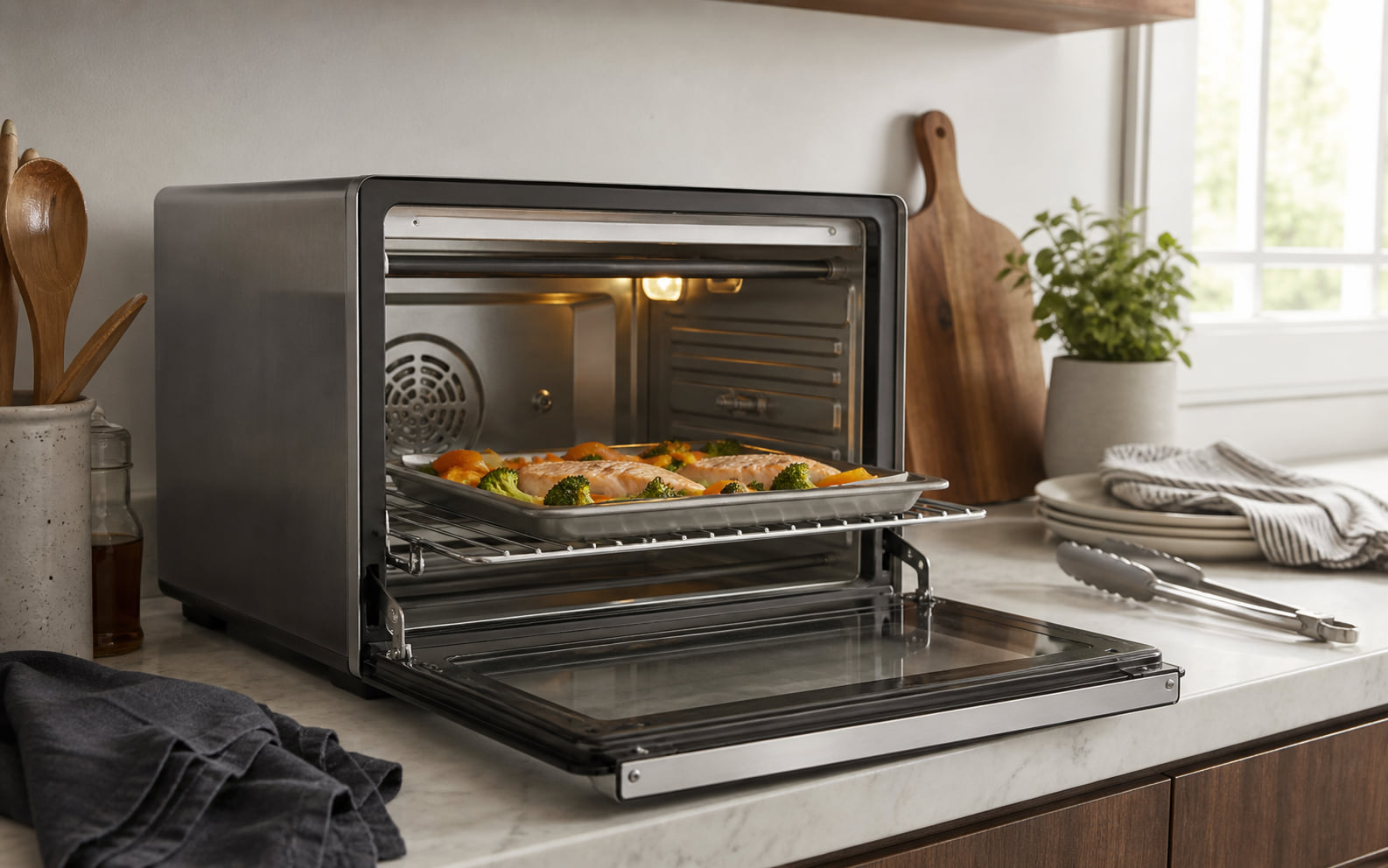 Product-neutral editorial sceneLet a countertop oven do moreConsolidate recurring rack-and-tray jobs.Explore this life
 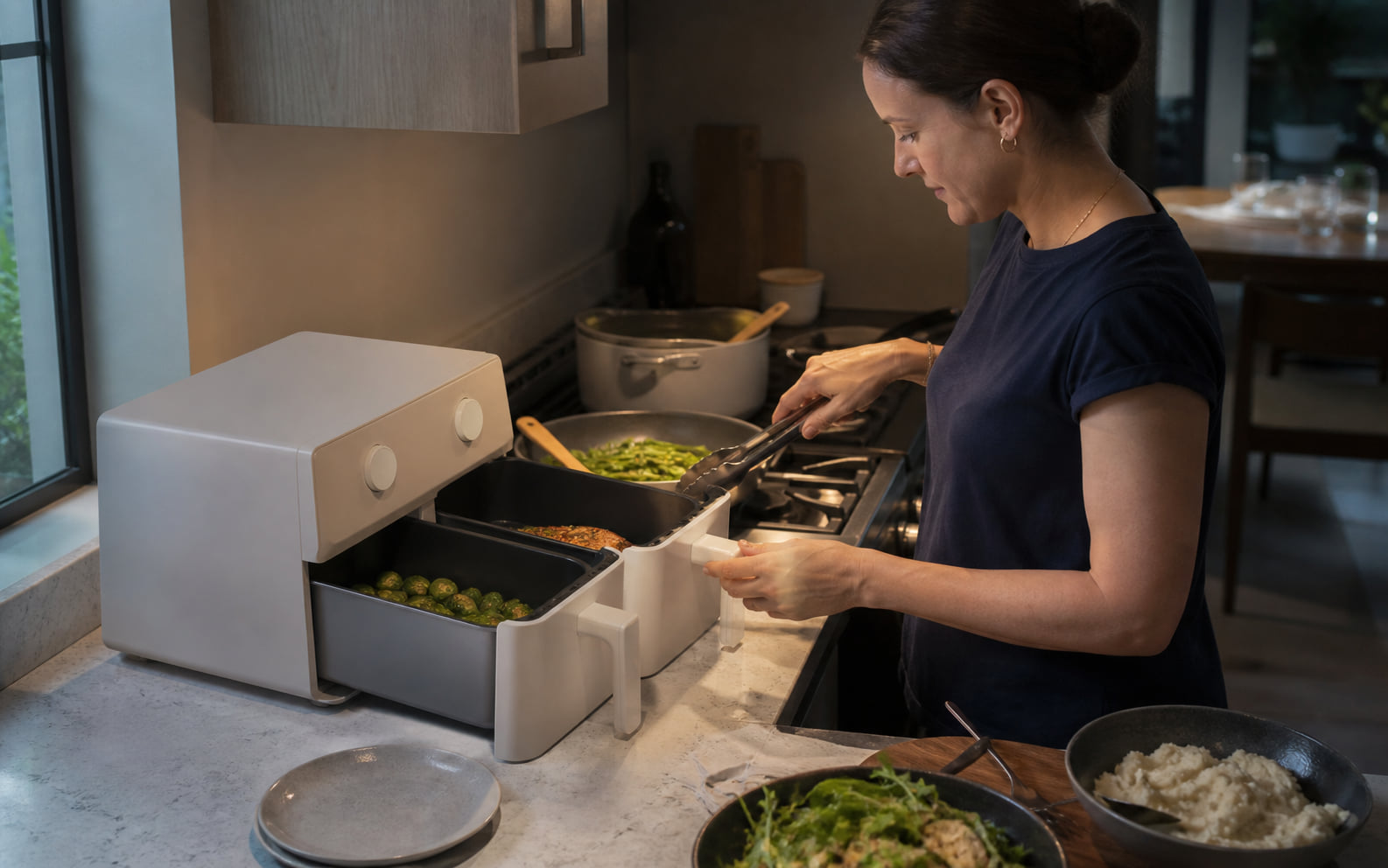 Product-neutral editorial sceneAdd a second hot zoneCoordinate separate meal components in parallel.Explore this life
 THE LIFE AROUND THE HEAT
These are possible buyer-relative outcomes, not measured findings.
A specific, recurring small-batch job earns permanent space.
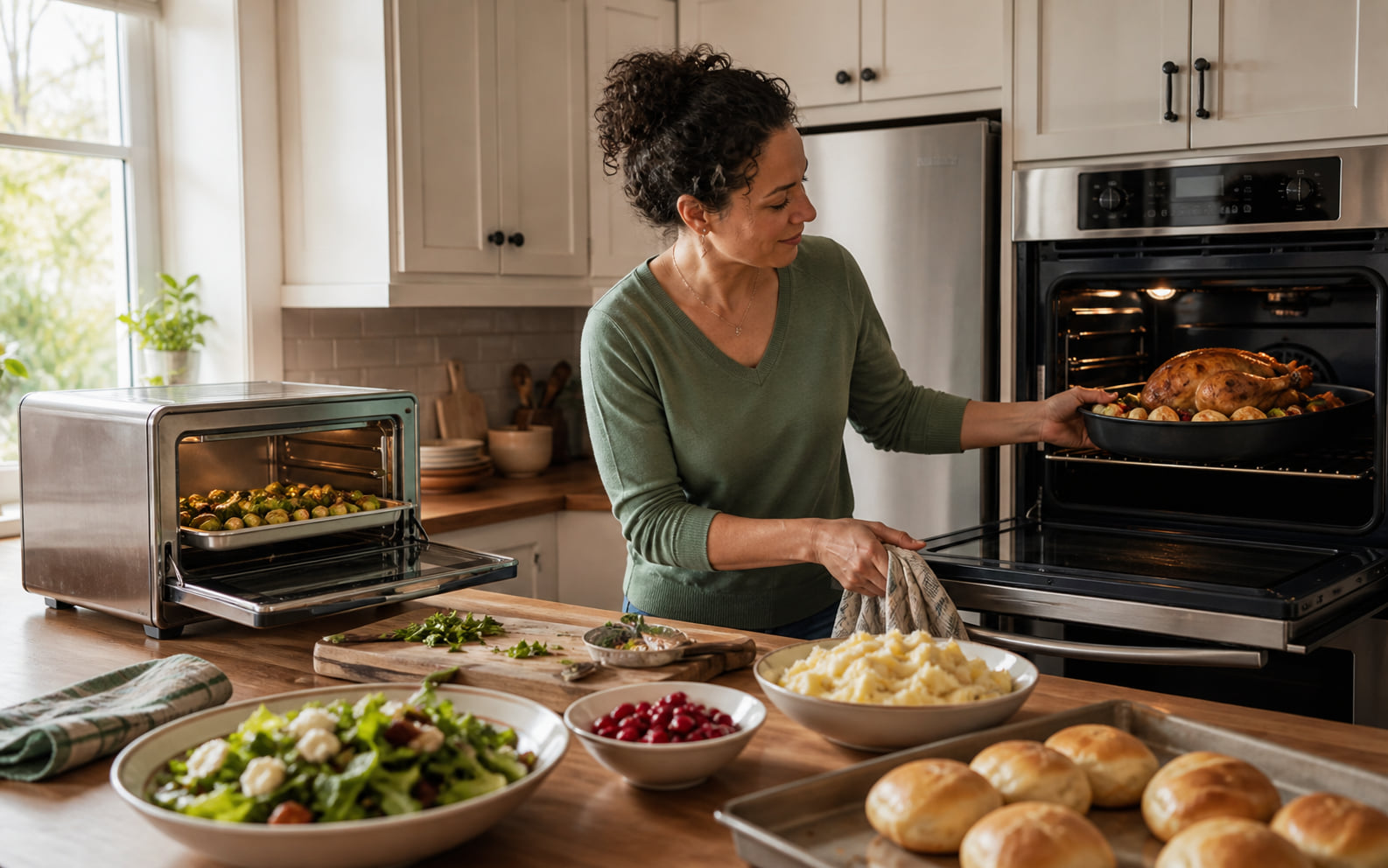
Parallel heat changes how dinner components come together.
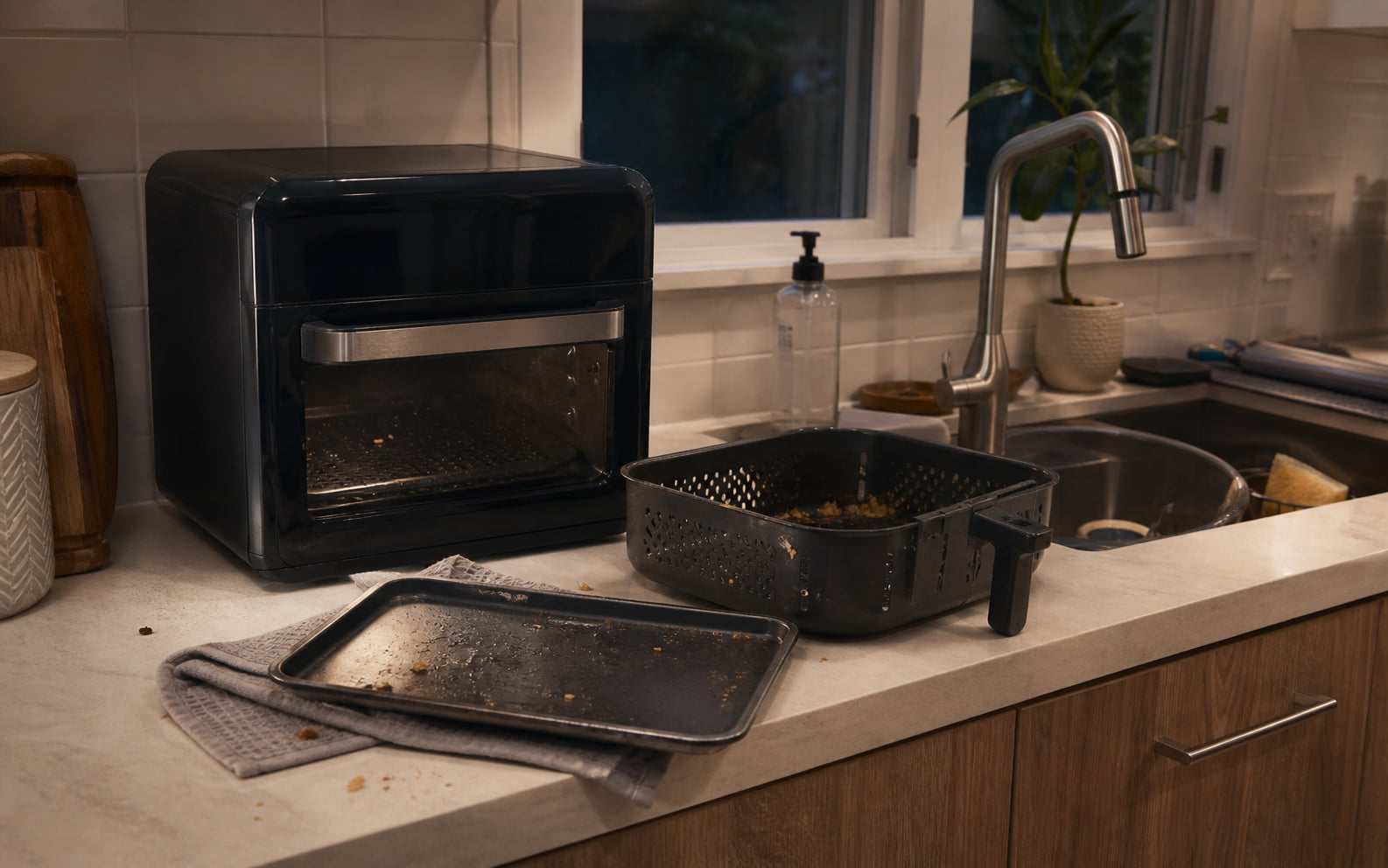
Baskets, trays, crumbs, grease, and storage outweigh the role.
Ownership gate
Maybe not.
A countertop cooker is worth considering when it removes a recurring small-batch or meal-coordination annoyance. It is a poor trade when the current oven already works and the new appliance adds more handling, cleanup, or storage than it removes.
The sound decision can be to keep the oven, delay the purchase, borrow or test a format, or buy nothing.
Four possible lives
This is a complete no-purchase path. It keeps a familiar cooking system and avoids a second set of baskets, trays, controls, clearances, and storage decisions.
What stays simple: Existing cookware, controls, capacity, ventilation, and cleaning habits remain in one known system.What stays in the routine: Small batches may still use a large cavity, one oven temperature may constrain meal components, and readiness remains tied to the current appliance.Make the interaction smallGive one modest batch a bounded hot zone.This path prioritizes a compact interaction for portions that fit without crowding; it does not assume every dinner becomes faster or crisper.
What may become smaller: One portion can move out of the full-size oven and into a contained basket routine near the counter.What replaces it: Batch limits, shaking or turning, hot basket handling, food-contact cleanup, ventilation clearance, and storage enter instead.Let the countertop oven do moreUse a rack-and-tray format for several small-oven jobs.This path makes sense when multiple existing jobs converge on one countertop cavity rather than when a long feature list merely sounds useful.
What can consolidate: Several small-oven or toaster tasks can share one rack-and-tray appliance and its familiar door interaction.What ownership expands: The appliance occupies a larger hot footprint, needs door and ventilation clearance, and adds trays, racks, crumbs, grease, and interior cleaning.Add a second hot zoneCoordinate separate components without sharing one cavity.This path is distinct because its value depends on coordination across zones, not simply on fitting a larger amount of food.
What coordination may leave: Some serial cooking and temperature compromise may leave when two bounded components can run separately.What coordination enters: Two zones add loading decisions, controls, finish-time planning, hot parts, food-contact surfaces, counter width, and storage.Time Exchange
A purchase replaces one pattern of time with another. Compare what disappears, what enters, how often it recurs, how much attention it asks, and whether it feels like routine, learning, coordination, or burden.
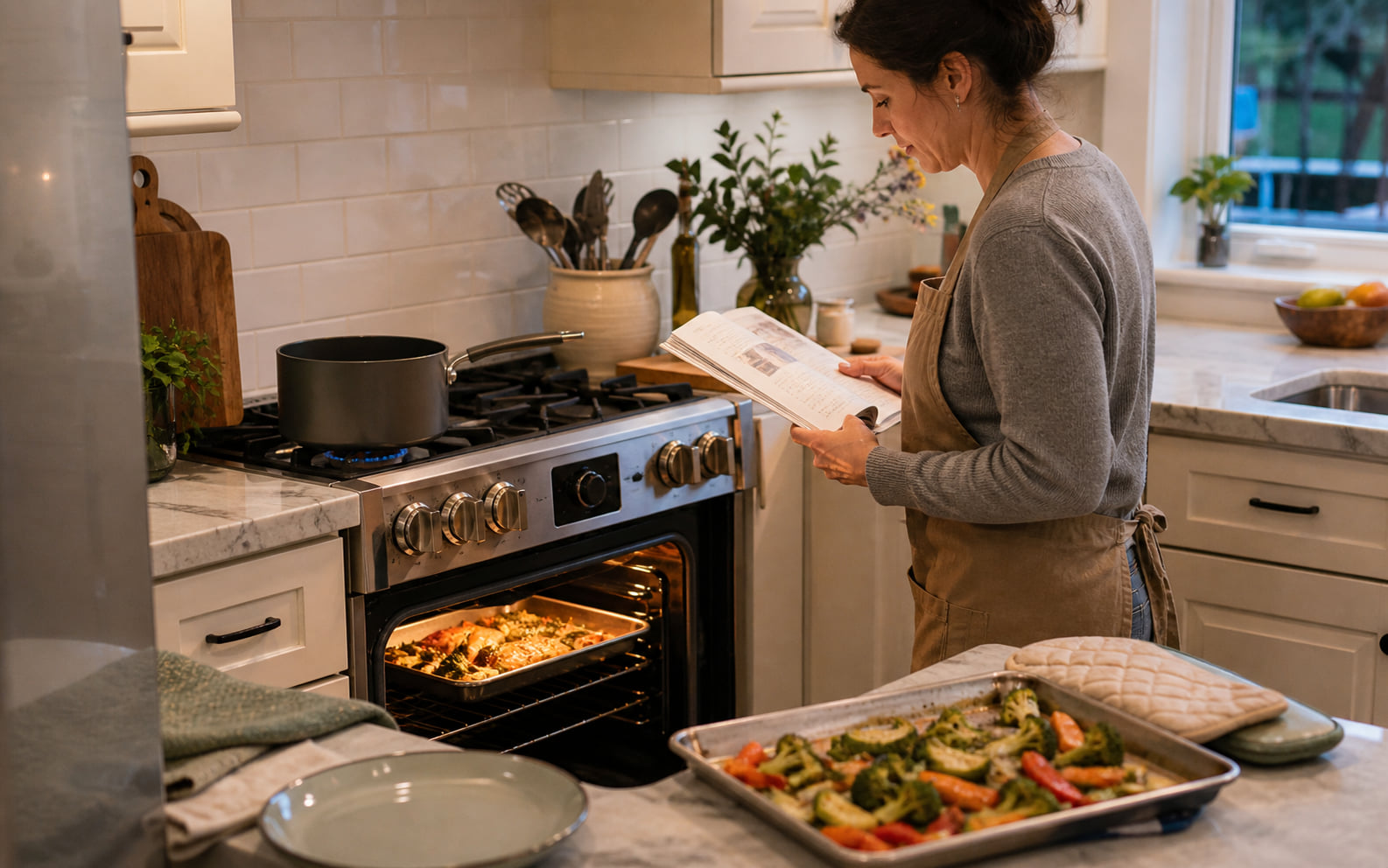
Meal components wait, share heat, or cook in sequence.
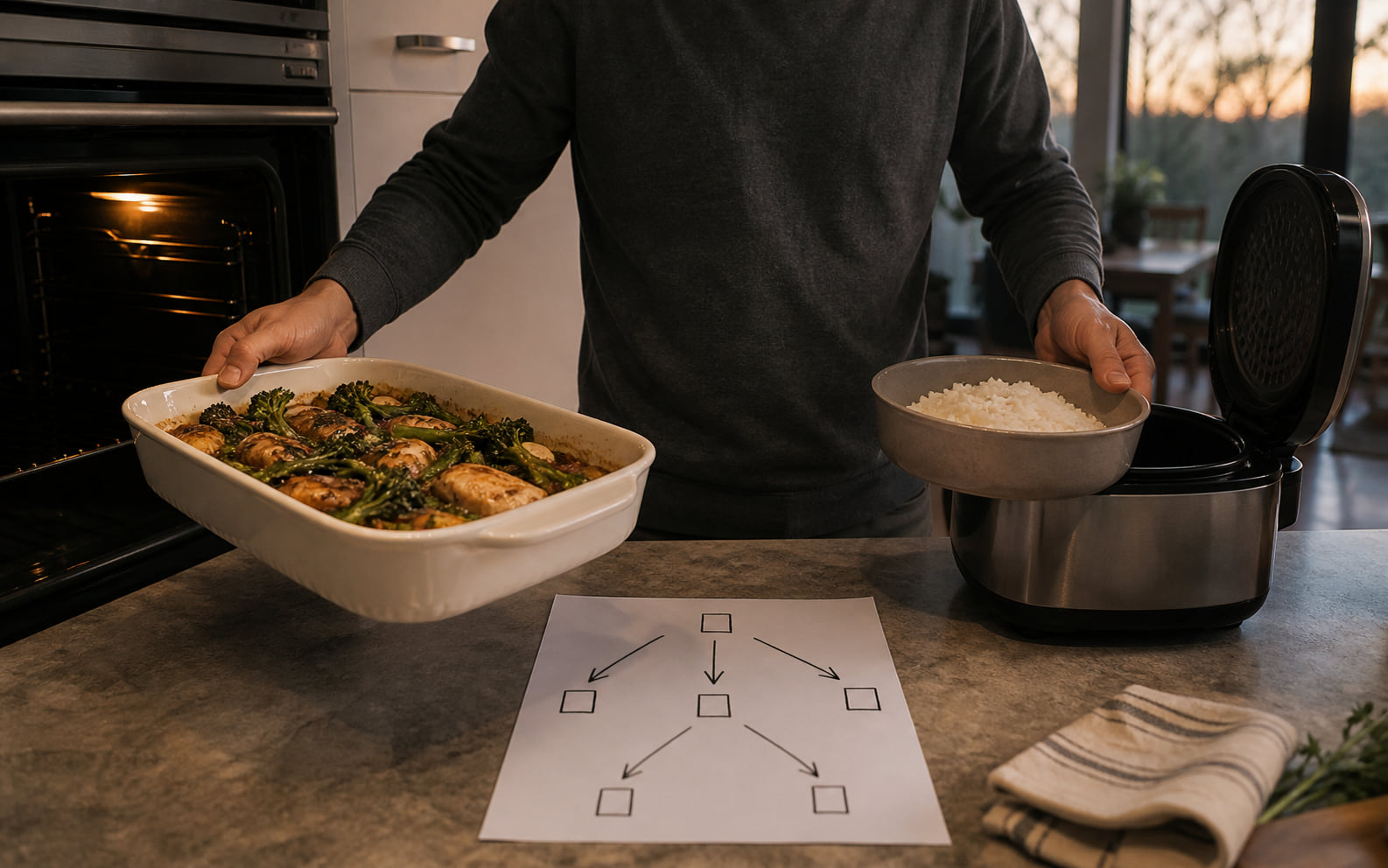
A second zone can change coordination when components truly diverge.
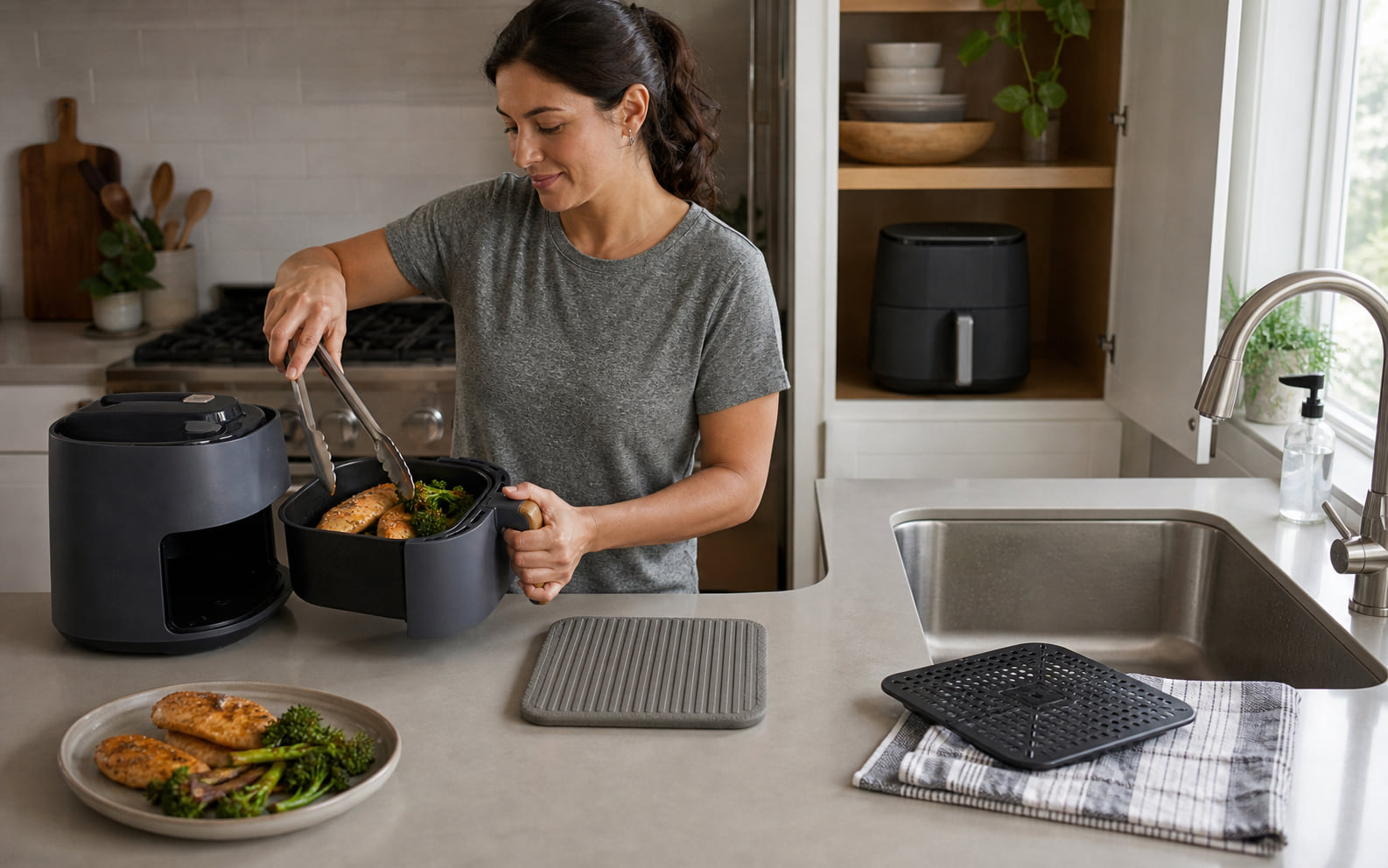
Loading, checking, hot handling, cleaning, and storage still remain.
The trade is not simply faster cooking. It is smaller-batch heat, a second cooking zone, and another appliance to clean.
Decision flow
Answer only the questions that can change ownership, path, product format, eligibility, or research priorities. Nothing here produces a score or recommendation.
Without a concrete recurring problem, a countertop appliance can duplicate heat while adding footprint and cleanup.
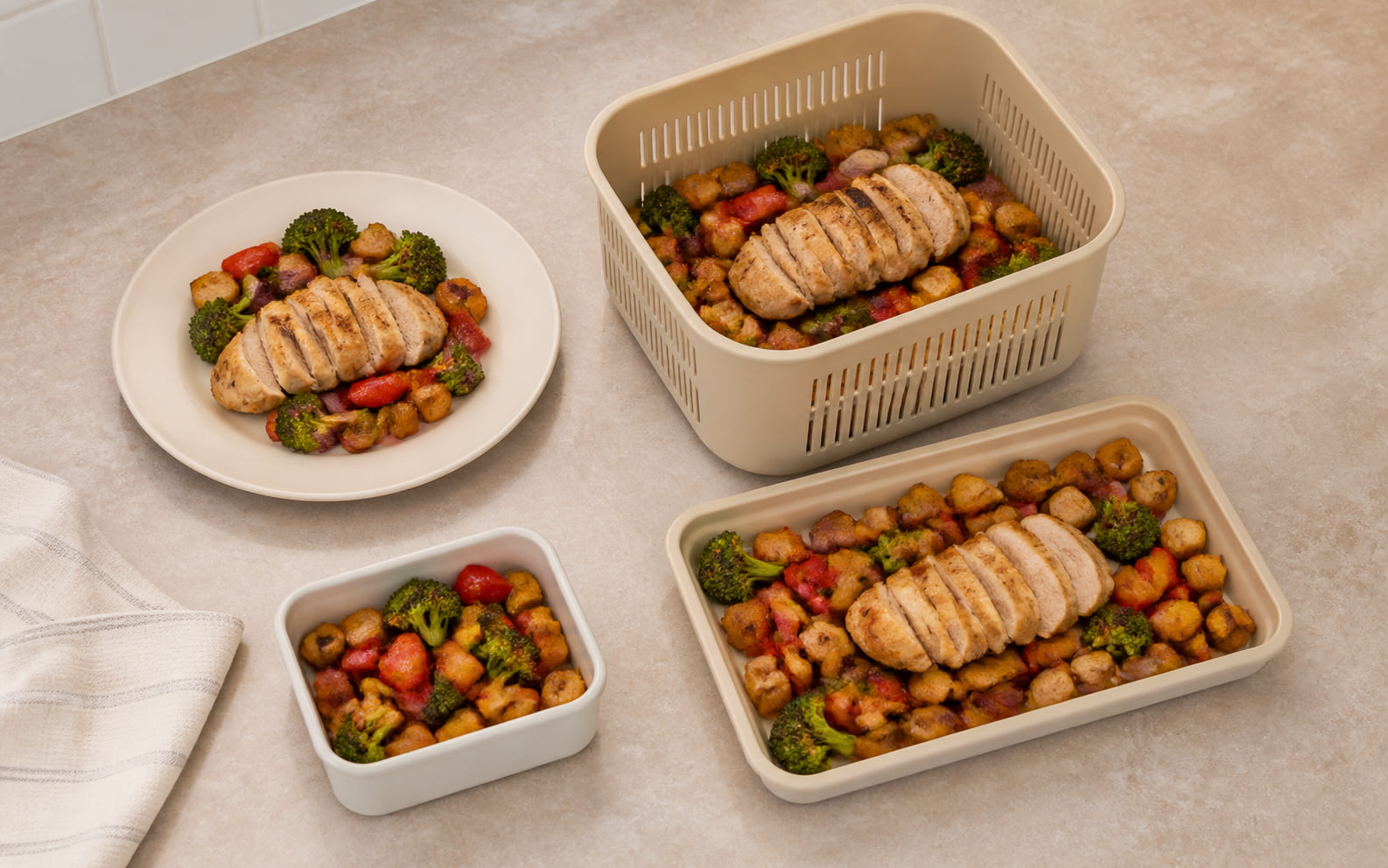
Usable food area can change whether smaller heat removes effort or creates serial loading and serving.
Separate heat can matter when temperatures or finish times conflict, but it also adds controls, hot parts, and cleanup.
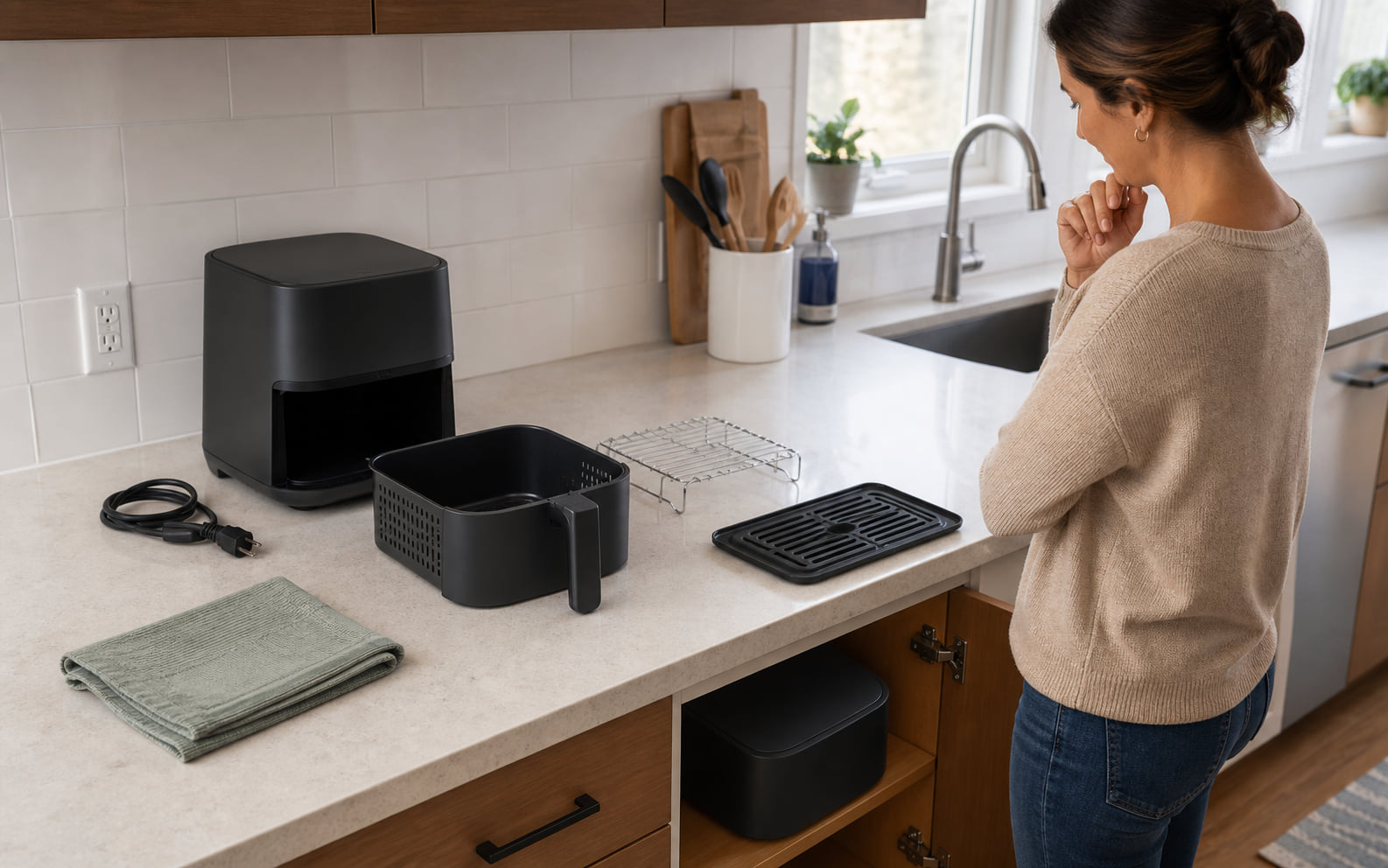
The usable footprint includes door or basket travel, hot clearances, cord reach, outlet access, and nearby prep space.
Conditional value
A feature matters only when it changes capacity, coordination, cleanup, footprint, or versatility in a routine the household already has.
Fits when: Normal portions fit in one usable layer or one planned batch.
Think twice when: Advertised capacity still forces recurring crowding or serial batches.
Fits when: Separate components genuinely need different heat or finish timing.
Think twice when: Most meals use one component or can share the current oven without friction.
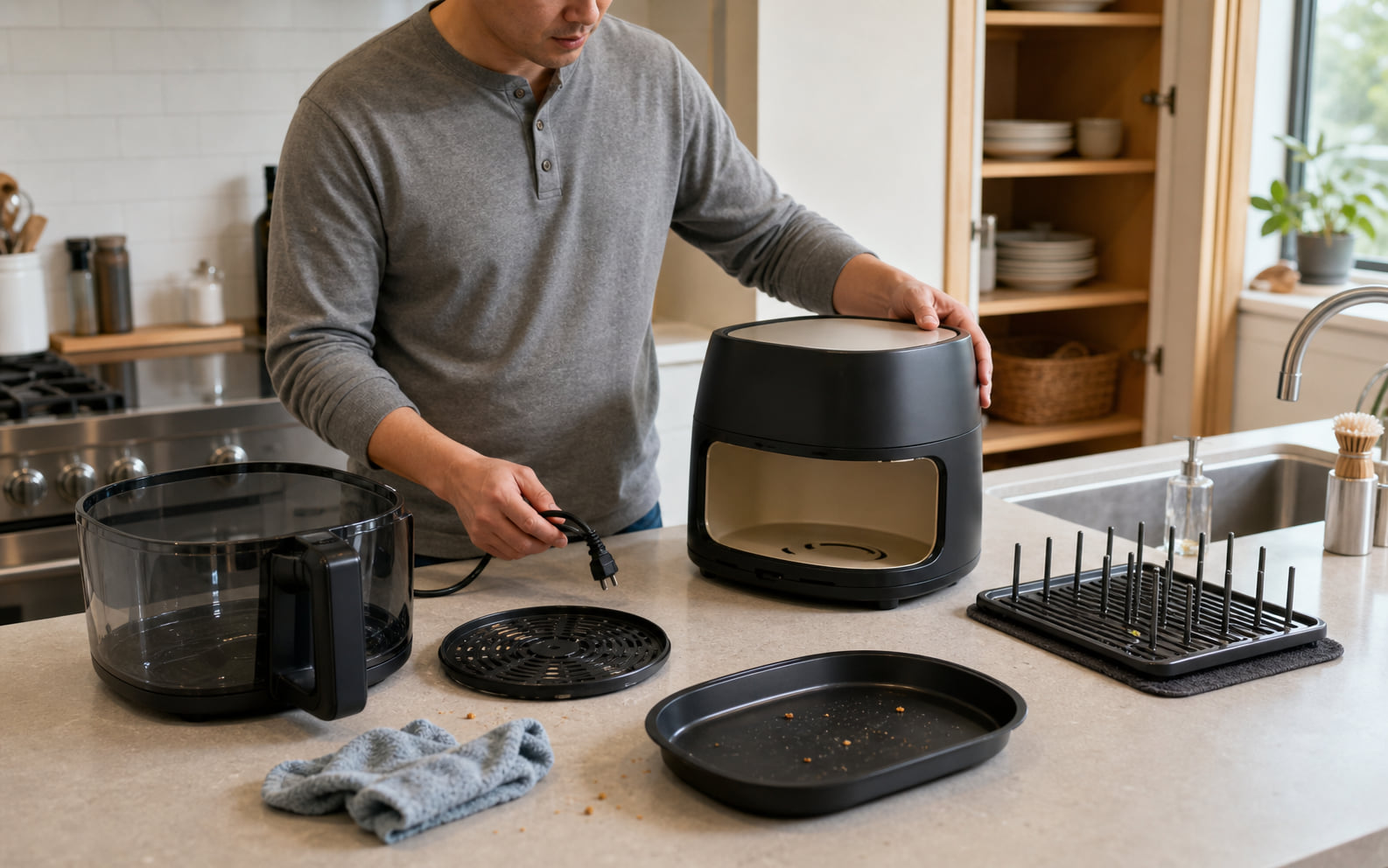
Fits when: Removable parts and accessible surfaces match the household's real washing routine.
Think twice when: The appliance still creates a reset that causes it to sit unused.
Fits when: The complete hot footprint, door or basket access, cord, and ventilation fit a stable location.
Think twice when: Every use requires moving, unpacking, or displacing a more valuable tool.
Fits when: Several recurring small-oven jobs can consolidate into one appliance.
Think twice when: Extra modes duplicate tools or foods the household rarely uses.
Solution-path comparisons
Keep one familiar heat system, or add a bounded countertop loop?
Compare the paths Basket air fryer vs. countertop ovenChoose a smaller basket interaction, or a broader rack-and-tray role?
Compare the paths Keep the oven vs. countertop ovenUse the existing cavity, or move small rack-and-tray jobs to the counter?
Compare the pathsBefore you buy
Count the complete hot footprint, door or basket travel, cord, and clearance.
Picture food-contact parts, crumbs, grease, drying, and interior access.
Avoid a duplicated appliance when familiar equipment already fits the meal.
Name the normal portion and meal component before buying more modes.
Evidence and limitations
Repository facts, historical claims, Spend & Grow interpretation, exact-identity gaps, offer gaps, conflicts, and unresolved evidence remain separate and inspectable.
Inspect claims, sources, conflicts, and limitations