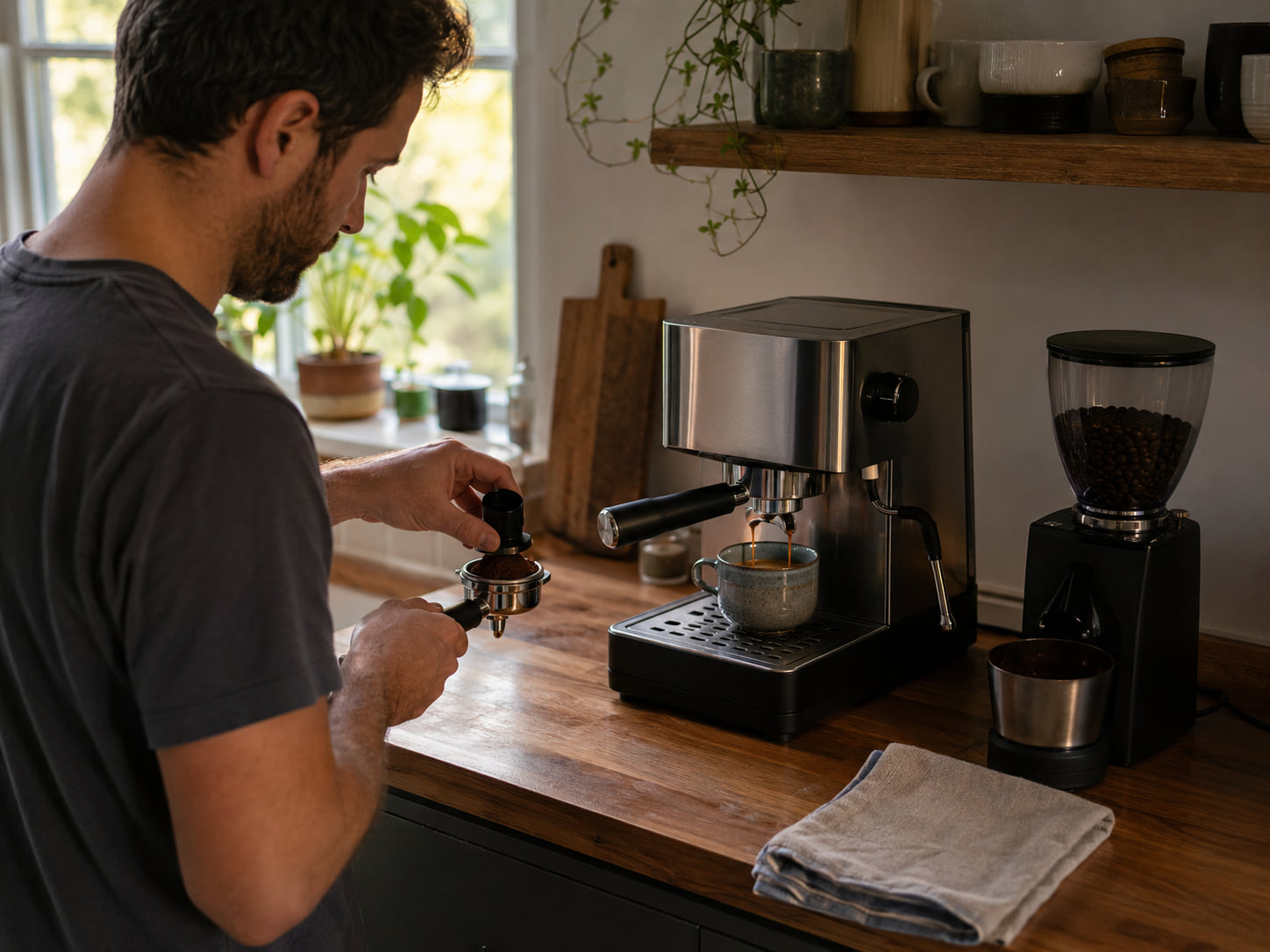
A possible ownership outcome
A ritual worth keeping
Grinding, preparing, tasting, and resetting become a welcome way to begin.
A category for mornings
A home espresso machine can make espresso part of your morning — or make your morning part of the machine.
Product-neutral decision guideFOUR ESPRESSO LIVES
 Product-neutral editorial sceneKeep the caféLet someone else own the machine and its care.Explore this life
 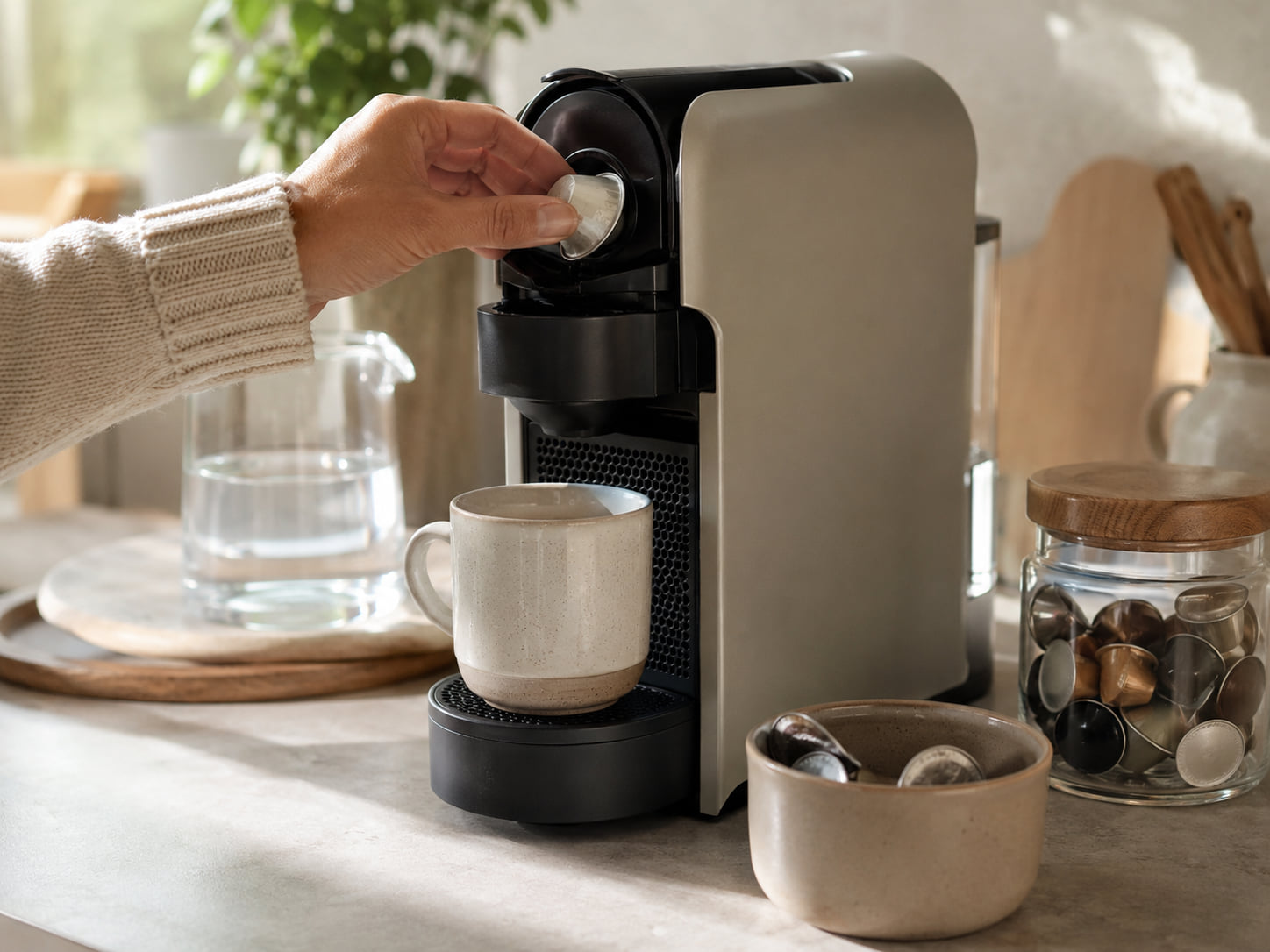 Product-neutral editorial scenePress and goKeep the at-home interaction small and repeatable.Explore this life
 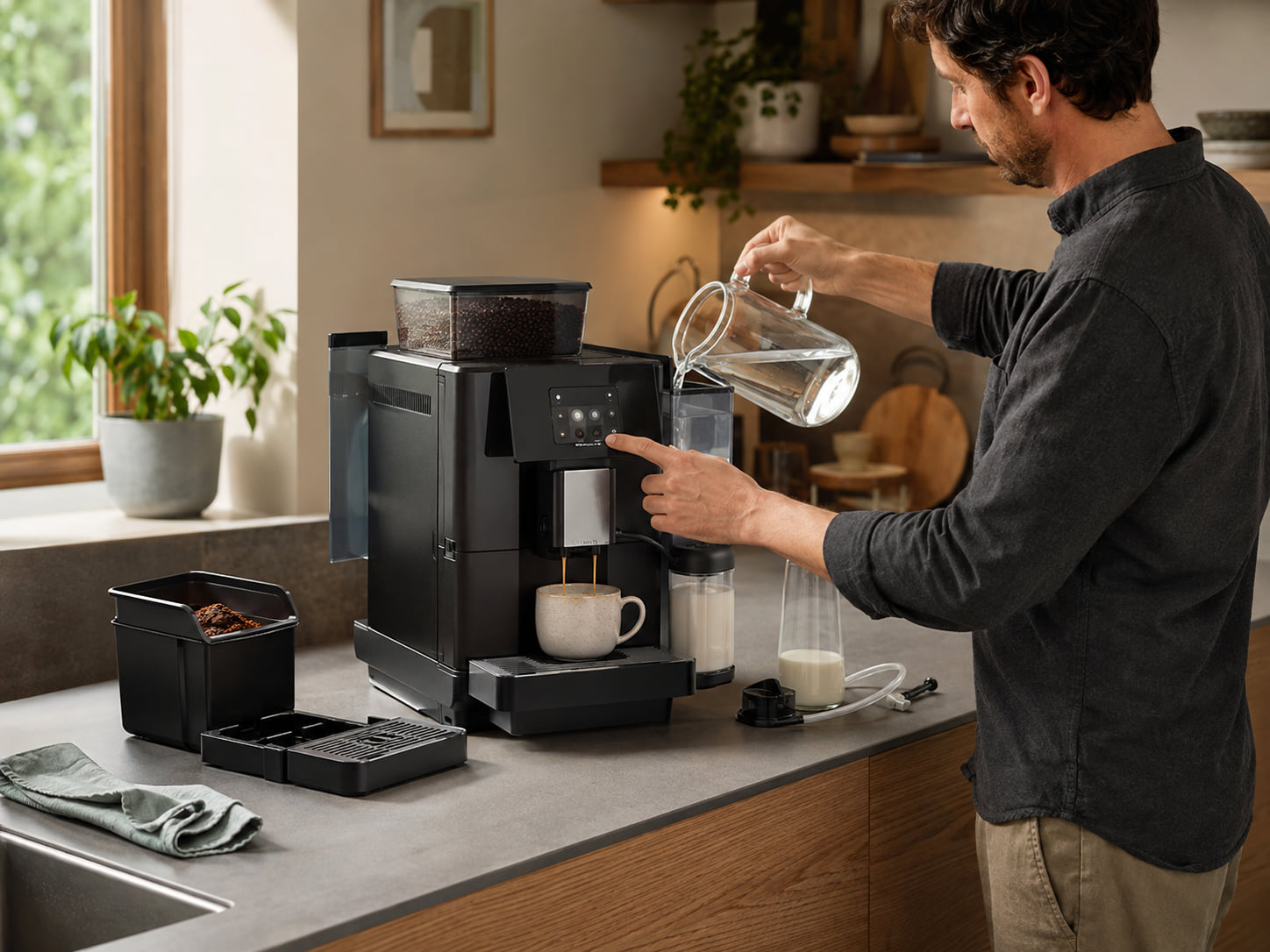 Product-neutral editorial sceneLet the machine handle moreDelegate preparation while keeping ownership work.Explore this life
 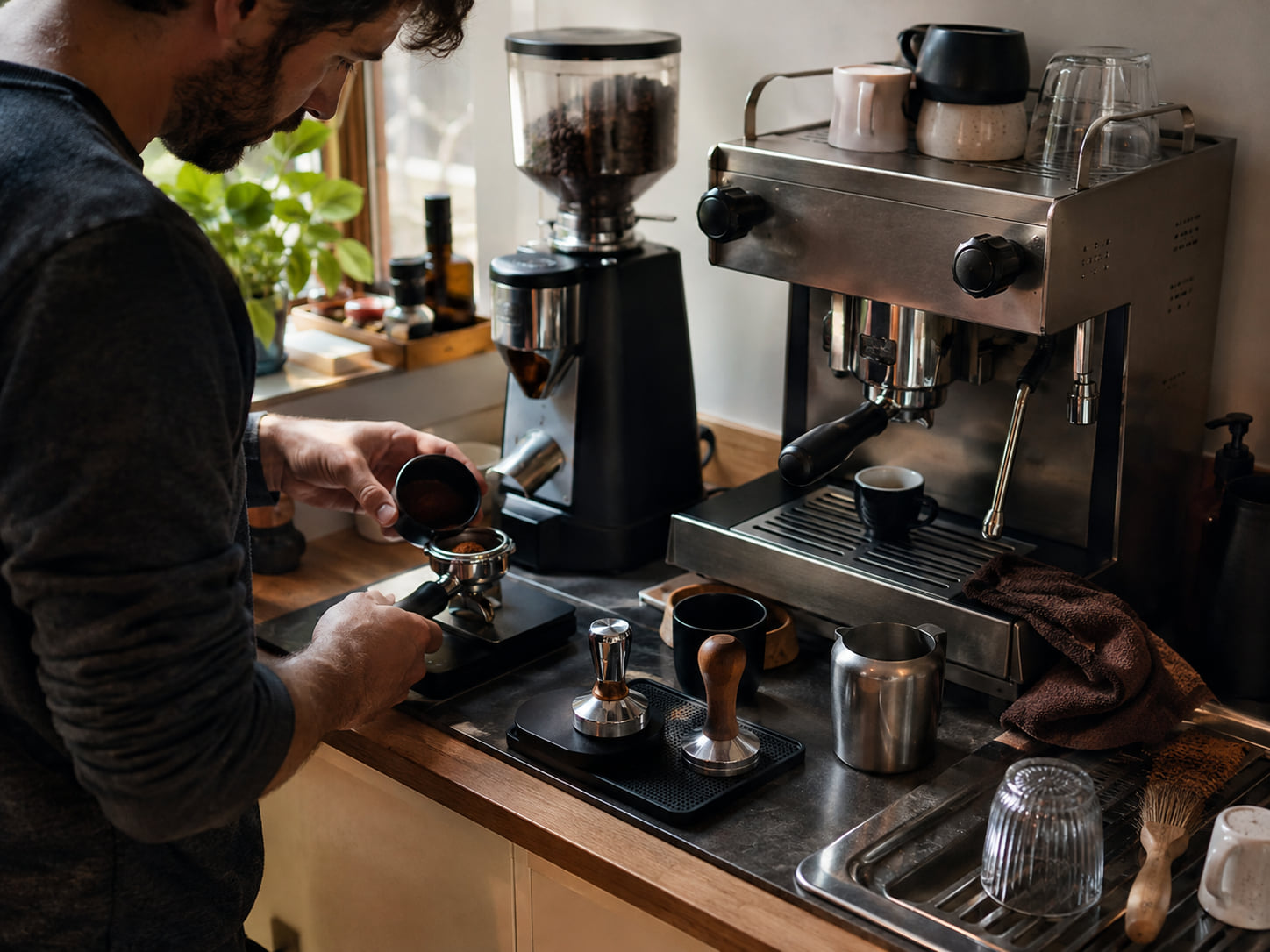 Product-neutral editorial sceneMake espresso a ritualOwn the making experience, learning, and reset.Explore this life
 THE LIFE AROUND THE DRINK
These are possible buyer-relative outcomes, not measured findings.
Grinding, preparing, tasting, and resetting become a welcome way to begin.
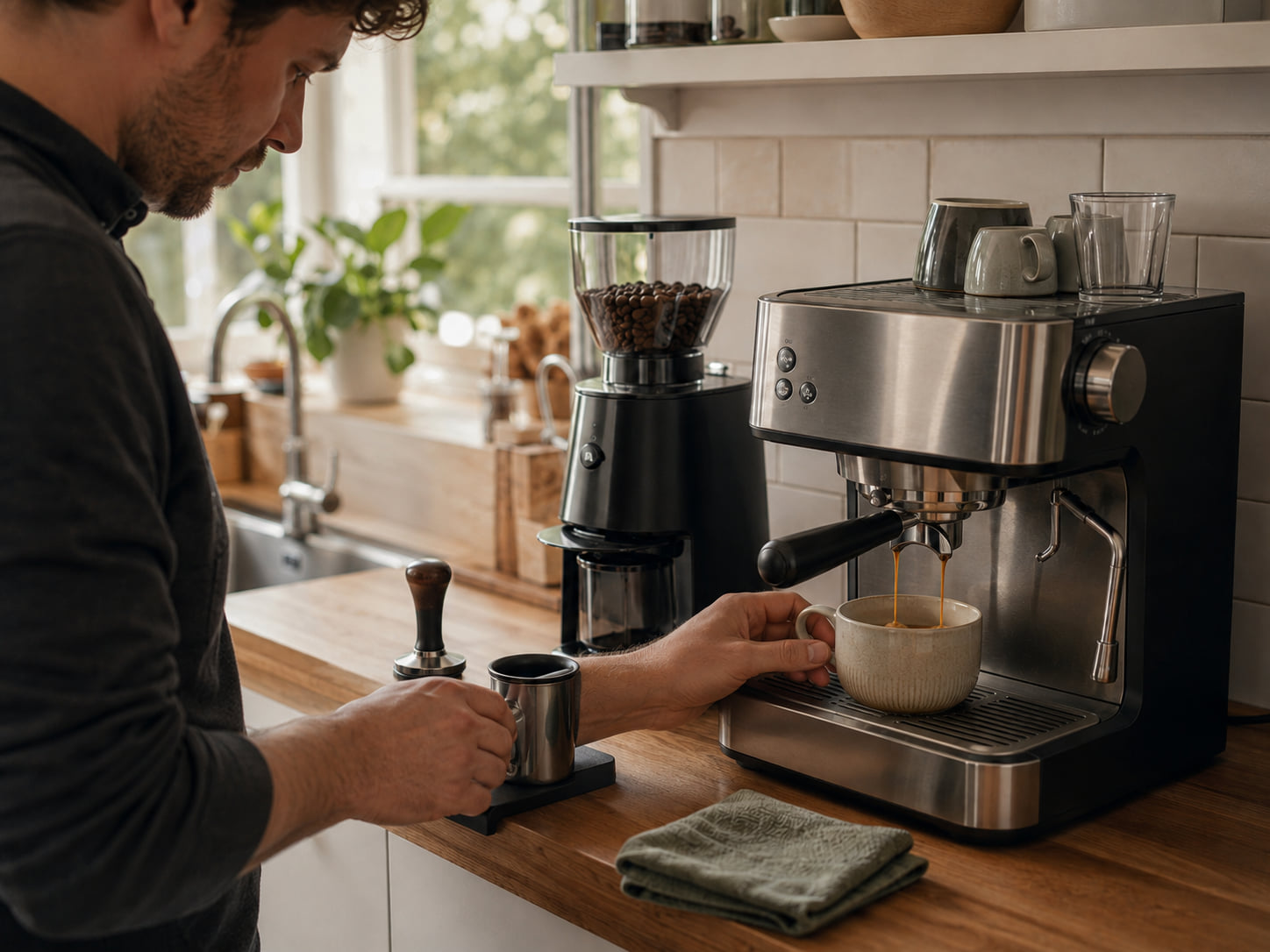
At-home access matters without becoming the center of every morning.

Warm-up, dialing, milk work, cleanup, and maintenance outweigh the drink.
Ownership gate
Maybe not.
A home machine is worth considering when at-home access or the making experience improves a recurring morning. It is a poor trade when the buyer wants only the finished drink and resents the system around it.
The best espresso decision can be to keep the café, choose a lighter path, delay the purchase, or buy nothing.
Four possible lives
This path treats the café as a complete solution, not a failure to buy. Equipment work, water care, and maintenance stay elsewhere.
What stays elsewhere: Grinding, machine readiness, milk-system care, repairs, and most cleanup remain with the café.What remains in your morning: Travel, opening hours, ordering, waiting, variable access, and the social environment remain part of obtaining the drink.Press and goMake the interaction small.The capsule path prioritizes repeatable access and a compact interaction over grinder control or a traditional preparation ritual.
What becomes simpler: Grinding, dosing, tamping, and dialing are removed from the per-drink sequence.What replaces them: Capsule purchasing, stock monitoring, disposal, rinsing, descaling, and a narrower preparation system enter instead.Let the machine handle moreDelegate preparation, keep ownership.This path reduces hands-on drink construction but does not make beans, water, milk, waste, and machine care disappear.
What the machine takes on: More of grinding, dosing, brewing, and saved drink repetition moves into the appliance.What ownership keeps: The household owns refilling, waste containers, automatic rinse water, removable parts, milk cleaning, settings, and a larger service system.Make espresso a ritualOwn the making experience.Traditional home espresso offers the most direct participation in making the drink and the clearest risk that the process becomes unwanted labor.
What comes home: Drink timing, ingredients, preparation choices, learning, and the possibility of a personal ritual move into the kitchen.What you must perform: Warm-up, grinding, puck preparation, extraction, milk work, back-to-back coordination, wiping, rinsing, dialing, and maintenance recur.Time Exchange
A purchase replaces one pattern of time with another. Compare what disappears, what enters, how often it recurs, how much attention it asks, and whether it feels like ritual, learning, social experience, or burden.

The café owns equipment work while access stays outside the home.
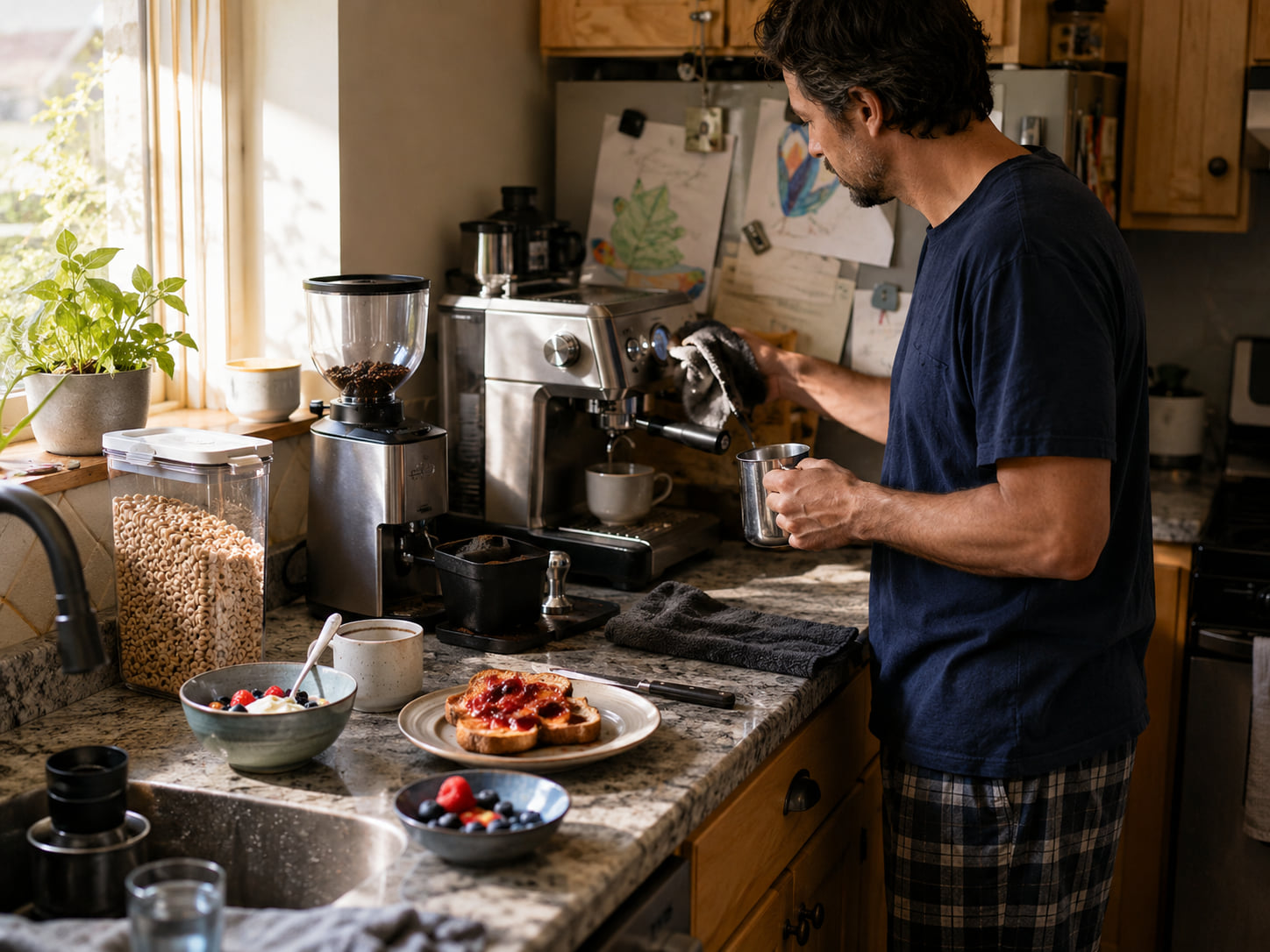
Travel may leave while ingredients, attention, and cleanup enter the counter.

Convenience and craft pull morning attention in different directions.
Bring the café home, and you also bring home the work.
Decision flow
Answer only the questions that can change whether to own, which path fits, or which product differences deserve research. Nothing here produces a score.
This can change the leading ownership path before any product detail matters.

The café may provide social contact, a transition, or reliable outsourcing that a home machine does not replace.
Milk and consecutive drinks expose steaming sequence, simultaneity, recovery, cleanup, and household throughput.
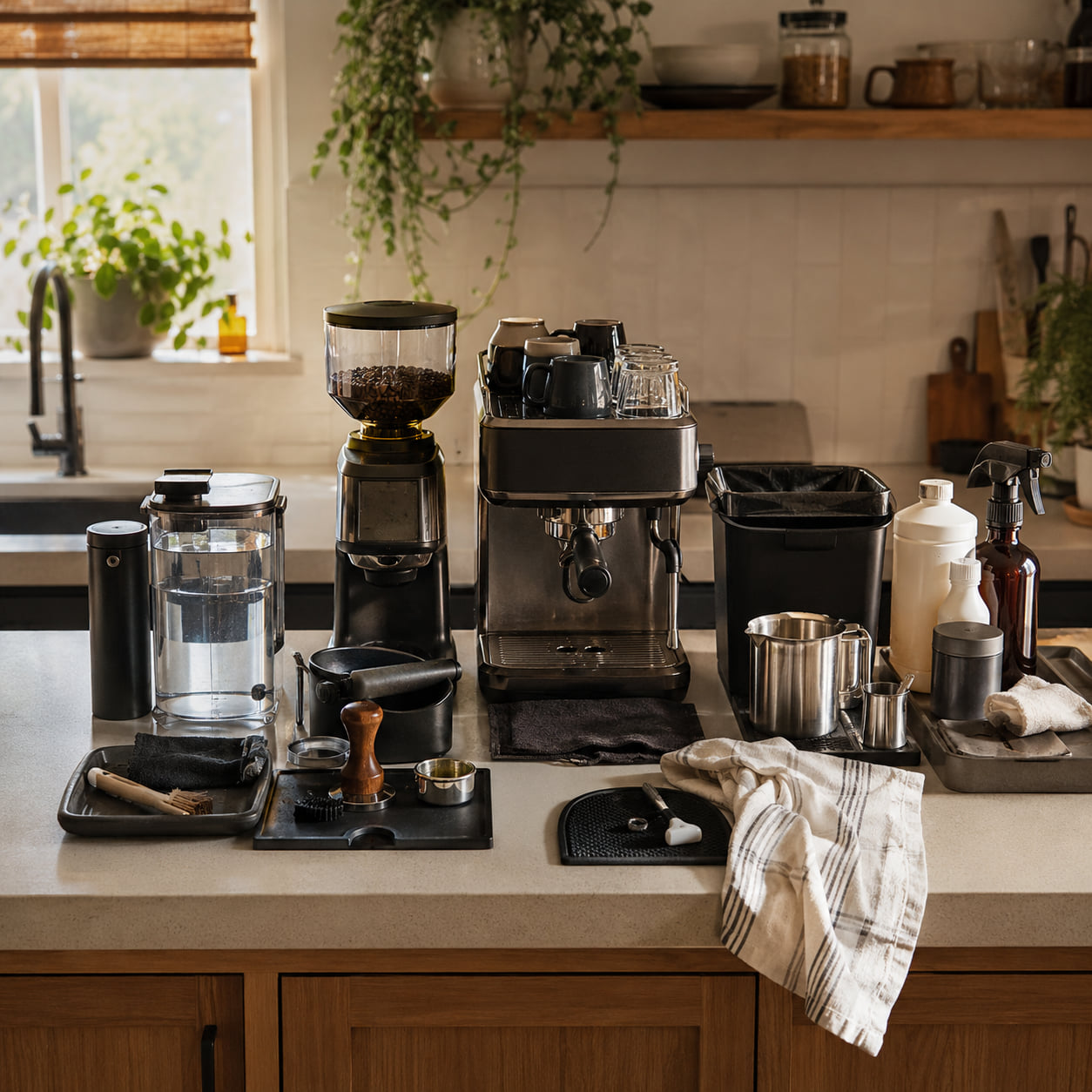
Machine, grinder or capsules, milk tools, water, towels, waste, ingredients, and access clearances can exceed the apparent product footprint.
Conditional value
A feature matters only when it changes access, attention, preparation, cleanup, maintenance, learning, or household fit in a routine you actually have.
Fits when: Reducing per-drink preparation would change a recurring rushed or shared routine.
Think twice when: Preparation is welcome ritual or use is infrequent.
Fits when: The real reset sequence differs enough between paths to affect daily willingness to use them.
Think twice when: The buyer already accepts the full cleaning routine.
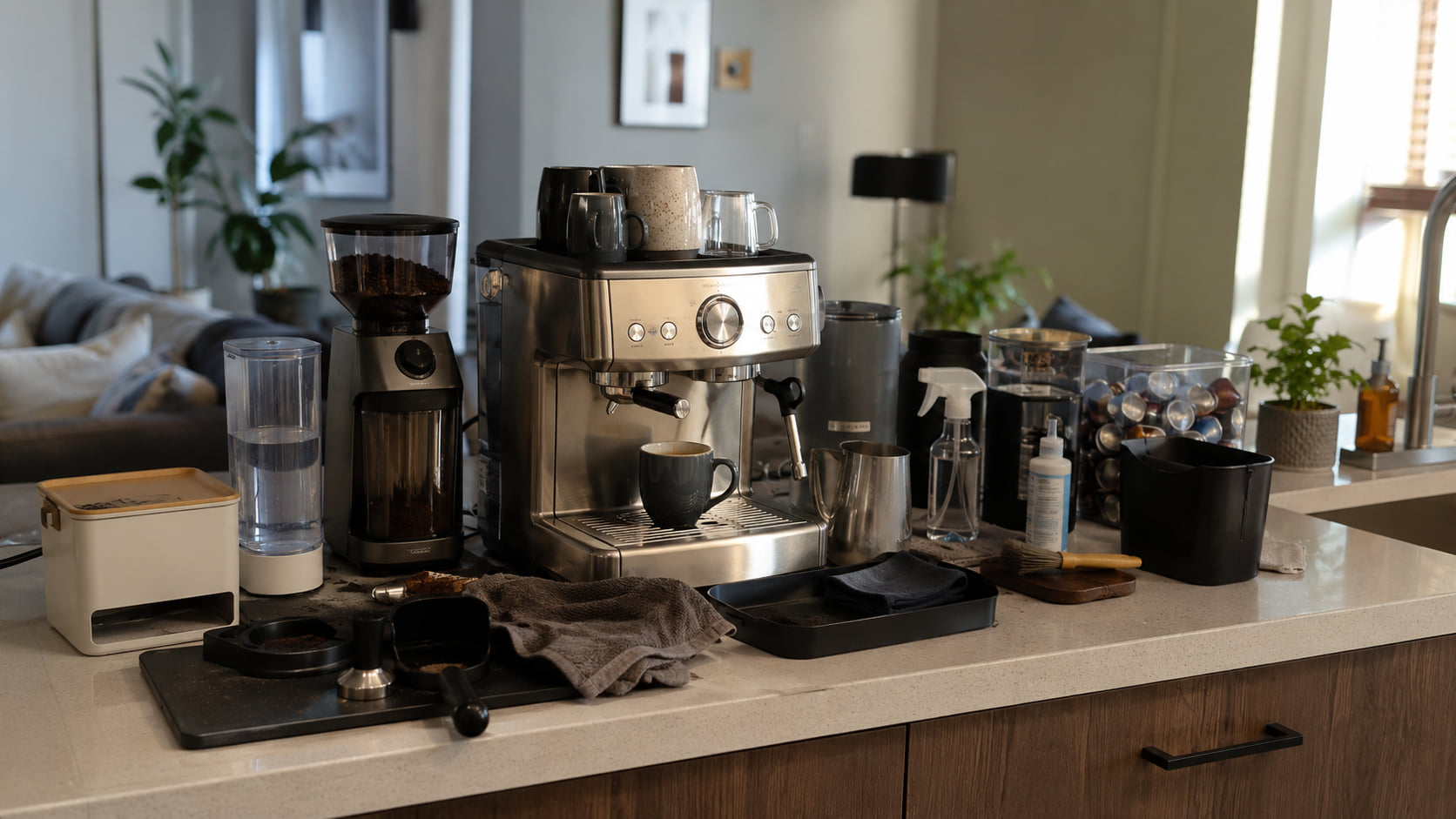
Fits when: Water treatment, descaling, backflushing, milk care, or service access could determine whether ownership remains viable.
Think twice when: The chosen path keeps equipment care elsewhere.
Fits when: Machine, grinder, tools, ingredients, knock box, and access clearances compete for permanent space.
Think twice when: The complete station has a stable home.
Fits when: The buyer wants skill development and will keep adjusting as ingredients change.
Think twice when: Learning would be experienced as recurring failure or delay.
Solution-path comparisons
Travel and waiting—or preparation and cleanup?
Compare the paths Capsule vs. traditional home espressoA standardized press, or preparation as part of the result?
Compare the paths Superautomatic vs. traditional home espressoDelegate drink preparation, or keep hands-on control?
Compare the paths Capsule vs. fully automatic espressoCapsule inventory—or ingredient refills and machine care?
Compare the pathsBefore you buy
Include the machine, grinder, ingredients, tools, milk gear, and access space.
Picture grounds, milk parts, wiping, rinsing, water care, and periodic maintenance.
Keep the social pause and outsourced equipment work visible as legitimate value.
The answer changes which ownership path, if any, belongs in the morning.
Evidence and limitations
Durable facts, manufacturer claims, editorial interpretation, repository-only structure, current-offer gaps, conflicts, and unresolved evidence remain separate and inspectable.
Inspect claims, sources, conflicts, and limitations